Why do two clocks start the moment water appears?
Most people react to water damage by its appearance, a wet floor, a dripping ceiling, and treat it as a cleanup problem. It isn't. It's a race against two processes that have already started. The first is migration: water moving out of sight into materials that will cost far more to dry the longer they sit. The second is microbial: mold beginning to colonize wet organic material within a day or two. Every step below exists to beat one or both of those clocks.
What should you do first when water appears?
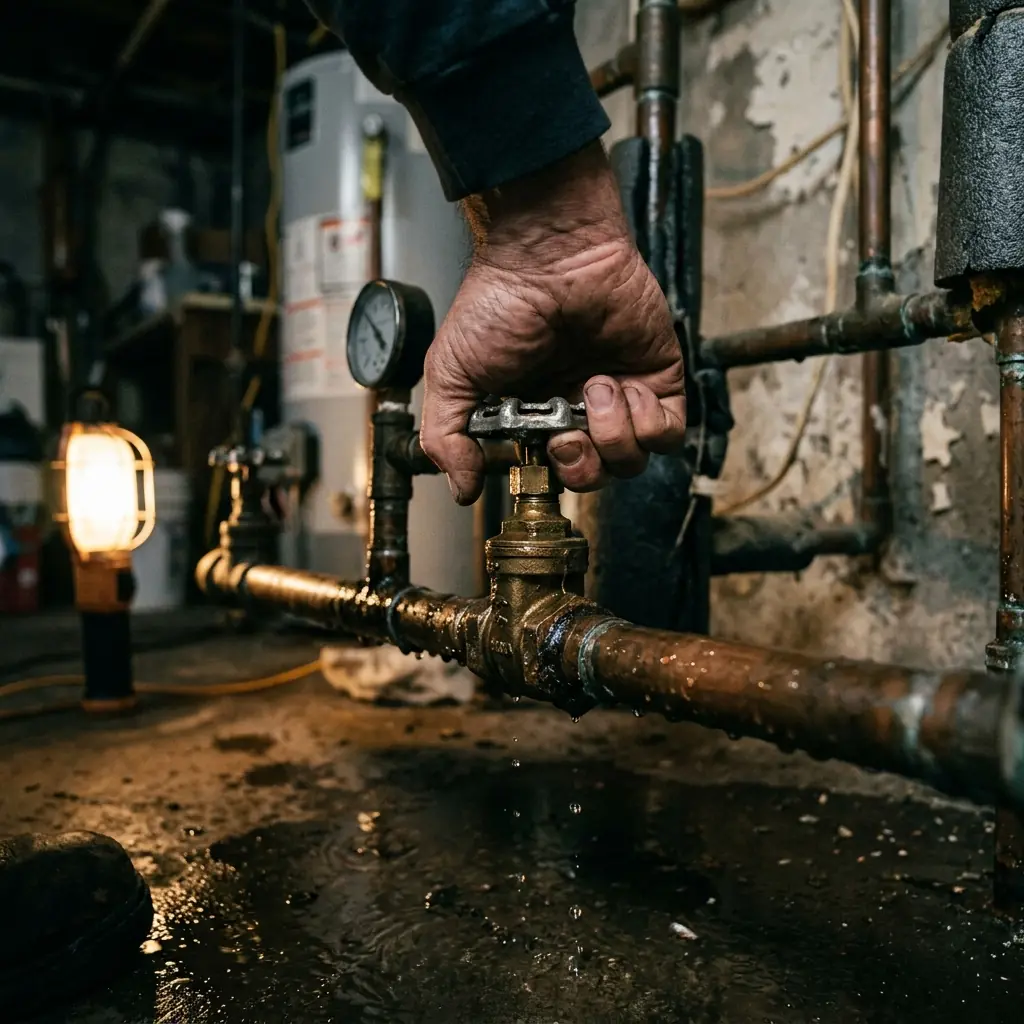
Stop the source before anything else. A burst supply line means finding your main shutoff, usually at the street meter on a Coppell slab home, and closing it. An appliance failure means killing that appliance and pulling it off the wall. A roof or storm intrusion you can't stop, but you can move furniture and valuables clear of the spread. With the source controlled, call a professional right away at (972) 961-2394, before you start improvising cleanup that a certified crew would do faster and more thoroughly.
Why should you document before you touch anything?
Between stopping the water and starting cleanup, spend a few minutes building your claim. Photograph and film the source, every affected room, the waterline on the walls, the damaged materials, and any personal property caught in it. This record is what your adjuster works from, and homeowners who skip it routinely settle for less than the loss actually cost them. The cleanup can wait ten minutes; the evidence of the original scope can't be recreated once you've moved things.
Where the Water Is Really Going
Within the first several hours, water follows the path of least resistance far beyond the visible wet spot. On slab construction it slides under baseboards, wicks up into the bottom plates of walls, and travels sideways through hairline cracks in the concrete. The damp patch you can see is often the small end of a much larger moisture zone hidden inside the wall assembly. That invisible spread is exactly what our water extraction crew maps with FLIR thermal imaging and moisture meters, because you can't dry what you haven't found.
How fast does the mold clock start after water damage?
The restoration industry standard, IICRC S500-2021, notes that mold can begin colonizing within 24 to 48 hours of exposure under the kind of humidity Texas homes carry. By hour twelve, untreated structural moisture is already at the leading edge of that window. Waiting until Monday because the leak happened Friday night doesn't buy you time; the mold clock runs straight through the weekend regardless of when anyone is available to look at it.
How do you set up your insurance claim to win?
The adjuster's first visit largely sets the scope and value of your claim, so arrive ready. Have your time-of-loss photos and video, a written timeline, the moisture assessment report from your restoration company, and an itemized list of damaged property with replacement values. Don't agree to a narrowed scope on the spot, and know that you can request a re-inspection if the initial assessment misses damage you believe is there. A prepared homeowner and a documented loss are what keep a claim from being quietly reduced.
What you do in the first hour sets the outcome. Call (972) 961-2394 for emergency water damage restoration anywhere in Coppell, including Coppell Village and every other neighborhood. Vetted local crew, 24/7.