Why Hidden Water Damage Costs More Than a Flood
A visible flood gets dealt with immediately because you can see it. Hidden moisture gets ignored because you can't, and that head start is exactly what makes it expensive. Weeks of quiet wetting saturates framing, feeds mold inside a wall cavity, and softens materials from the inside out, so the repair is already structural by the time the surface gives it away. In Coppell's larger two-story homes, there is simply more concealed space, more attic, more wall, more run of pipe, for that to happen unnoticed.
Ceiling and Attic Signs
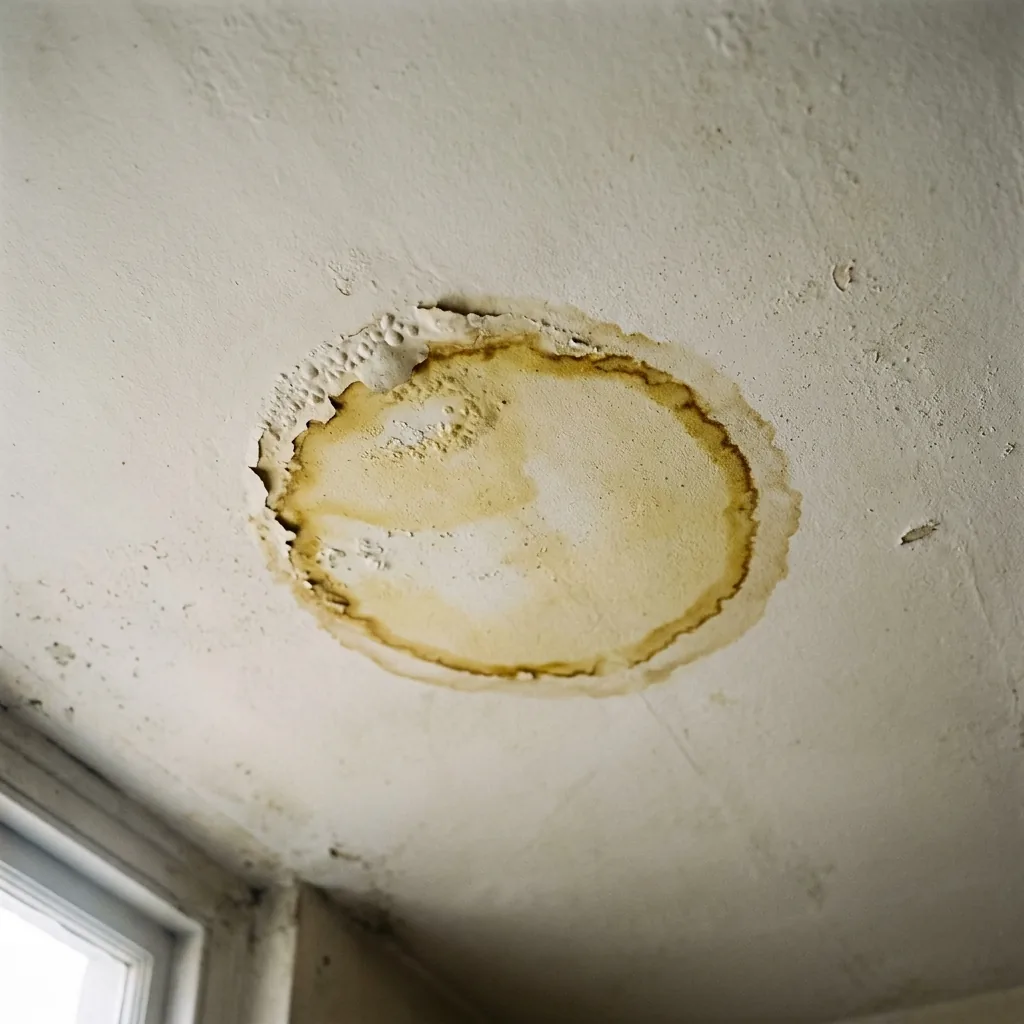
Look up first, because in a two-story Coppell home the ceiling sits under the most hidden plumbing and, often, an attic HVAC unit. A brown or yellow stain that bleeds back through fresh paint means moisture is still active above it, not gone. Drywall that feels soft or spongy when you press it has already saturated and lost strength, and on a ceiling that points to water pooling in the space above. Attic-mounted air handlers and the condensate lines that serve them are a frequent culprit here, which is why an unexplained ceiling stain is worth an attic inspection before the drywall fails.
Wall Signs
Walls telegraph moisture in three ways. Paint or wallpaper that bubbles, peels, or warps is reacting to water behind it, most often near windows, in bathrooms, or on exterior-facing walls. A musty smell that lingers in one room after you've changed HVAC filters is usually mold working inside a wall cavity, not a duct problem. And mold appearing low on baseboards or behind furniture on an exterior wall points to a slow, chronic source: a fitting that has dripped onto the bottom plate for months, or summer condensation where the wall runs cold behind under-insulated sheathing.
Floor and Slab Signs
The floor reports moisture coming from below. Hardwood or engineered planks that cup, buckle, or feel spongy underfoot are pulling water from somewhere, and on Coppell's Blackland clay, elevated slab moisture in a wet season is a common source. A water bill that climbs with no change in usage is often the very first symptom of an under-slab supply-line leak, arriving well before any dampness reaches the floor surface. Reading the direction of that moisture takes meter readings at several points, which our structural drying team maps before any equipment goes down.
What to Do the Moment You Spot One
Any single sign here justifies a professional moisture assessment, because the difference between early and late is the difference between a drying job and a rebuild. Don't paint over a returning stain or run a box fan and hope; neither reaches moisture trapped inside an assembly. We use FLIR thermal imaging and moisture meters to find the source and the full extent without opening a wall on a guess. Caught early it's a water extraction and drying job; left alone it becomes a mold remediation job.
Spotting any of these in your Coppell home? Call (972) 961-2394. Thermal imaging and moisture mapping pinpoint the source and extent before any demolition.