Every Water Loss Starts a Mold Clock
Mold spores already live in your home at low levels, harmless as long as things stay dry. Give them wet material that stays wet and they have everything they need to take hold. The restoration standard, IICRC S500-2021, puts the start of colonization at 24 to 48 hours after exposure under normal indoor conditions. That first day is the whole game: dry the materials inside it and you prevent mold entirely, rather than having to remove it later.
How Texas Humidity Speeds the Clock Up
North Texas summers run humid, and humidity is what shortens the window. When the air is already heavy with moisture, wet drywall and subfloor give up their water slowly, so a cavity stays wet longer on its own. That's why the usual homeowner reflexes, cracking windows and running box fans, do so little here: they can't lower the moisture inside a wall in humid air. Professional LGR dehumidifiers pull water out of the air and the materials actively, instead of waiting on evaporation that Coppell's climate is working against.
The First Day: When Drying Still Beats Mold
Inside the first 24 hours the goal is simple: get the materials dry before anything grows. Fast extraction plus structural drying keeps drywall, framing, and subfloor intact and mold-no-obligation. It's the same extraction and drying process: extract the standing water, then set a moisture baseline so meters can confirm walls and baseboards are actually dry, whether we're preventing mold or responding to it; the difference is only how far along the clock has run when we start. Every hour saved in that first day is material you get to keep instead of replace.
Hidden Mold Is the Rule, Not the Exception
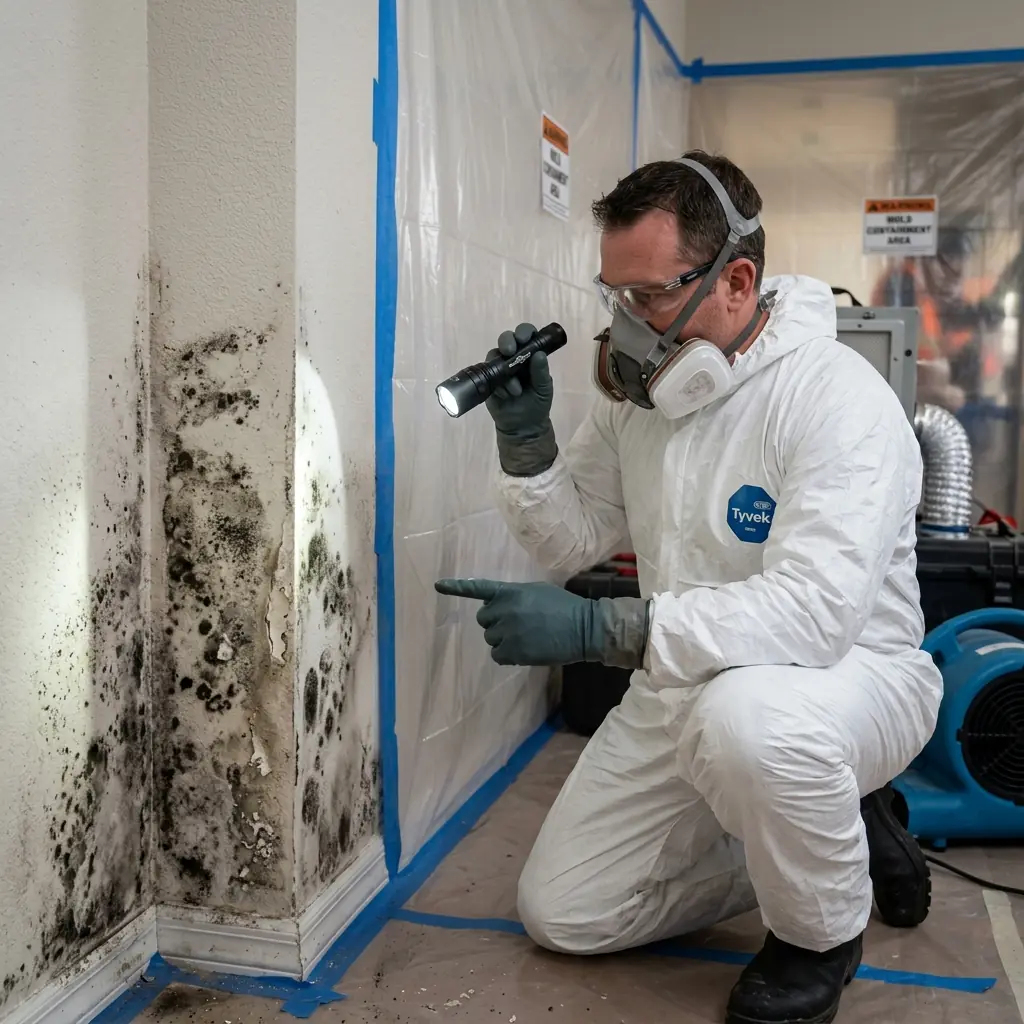
By the time you see mold on the face of a wall or along a baseboard, it's a late sign; the colony has been growing inside the cavity for a while. Most mold after a water loss is hidden, on the back of drywall, on framing, on the paper backing of insulation, where a visual check never finds it. Locating it takes FLIR thermal imaging and HEPA air testing, not a flashlight. Assuming a wall is fine because its surface looks clean is how a small event becomes a large one.
What Changes Once You're Past 48 Hours
After the window closes, the job changes character. Before, the plan is to dry in place. After, it's to dry plus remove or prevent mold, because drywall paper and framing that sat wet that long in Texas humidity can already carry early growth on surfaces you can't see. Materials that would have dried and stayed now may have to come out and be replaced. We don't quote that escalation by phone since every scope differs, but the gap between an early call and a late one is real. For anything past the window, our mold remediation service works to the ANSI/IICRC S520 standard across every scope.
If a water loss in your Coppell home went untreated past the first day, assume mold is already starting. Call (972) 961-2394, whether you're near Chaucer Estates or anywhere else in Coppell.