Water Category Is the First Question, Not How It Looks
Carpet soaked by a clean supply-line leak (Category 1) behaves very differently than carpet soaked by sewage or floodwater (Category 3), even if both look equally wet on the surface. Category 1 carpet can often be extracted, treated, and dried in place. Category 2 and 3 water carries bacteria and contamination that the carpet fibers and pad absorb. Per IICRC S500, Category 3-contaminated carpet and pad are generally not salvageable and need to be removed, regardless of how new or expensive the carpet is.
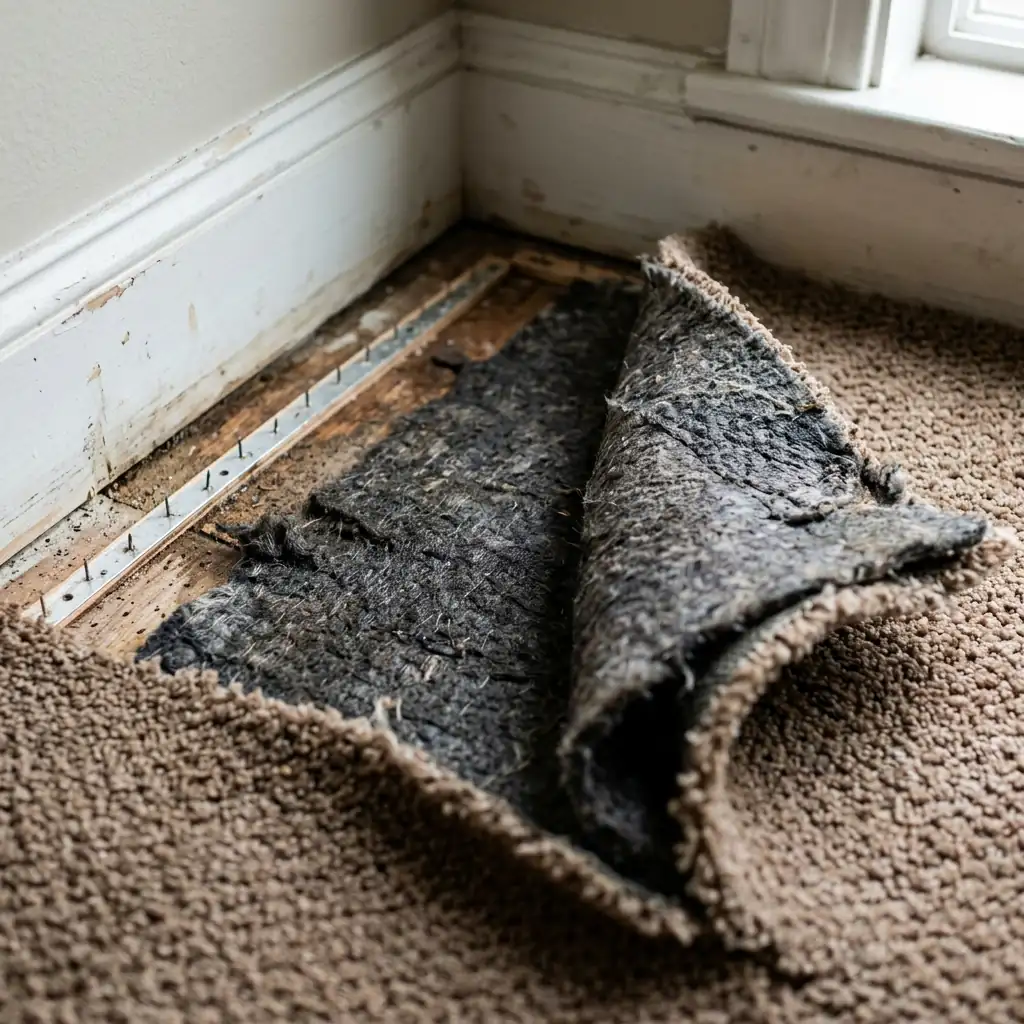
The Pad Almost Always Tells a Different Story Than the Carpet
Carpet pad absorbs and holds water far more than the carpet fiber on top of it. Even when the visible carpet surface looks like it's drying fine, the pad underneath can stay saturated for days, feeding mold growth from below. In most water damage restoration jobs, the pad is removed and replaced even when the carpet itself is salvageable, simply because pad is inexpensive relative to carpet and nearly impossible to dry reliably in place.
How Fast You Act Changes the Outcome
Mold can begin colonizing wet materials within 24 to 48 hours, and our mold remediation team sees this most often in carpet fiber and pad, exactly the kind of organic material that mold colonizes fastest. A clean-water carpet soak extracted and dried within the first day has a real chance of being saved. The same carpet, left wet for two or three days while a homeowner runs box fans and hopes, usually crosses into territory where removal is the safer call, both for health reasons and because the backing and pad have likely failed.
What Professional Carpet Drying Actually Involves
Professional extraction starts with a truck-mount or portable extractor pulling as much water out of the carpet and pad as possible. From there, Dri-Eaz air movers are positioned to create airflow across and underneath the carpet, and LGR dehumidifiers pull moisture out of the air in the room so the carpet has somewhere for its remaining moisture to evaporate to. Moisture meters track the carpet and subfloor daily until readings confirm the assembly has reached safe levels, not just until it looks dry on top.
When Replacement Is the Right Call, Not a Sales Tactic
Replacement makes sense when the water category is 2 or 3, when carpet has been wet for more than about 48 hours, when there's visible mold or a persistent odor after drying, or when the pad has broken down. An honest restoration company tells you this directly rather than defaulting to either extreme. We give an honest save-or-replace assessment after our initial inspection, and we'll never quote a fixed dollar figure over the phone since every room and every carpet is different.
If you have wet carpet anywhere in Coppell, the clock is already running. Call (972) 961-2394 for a no-obligation assessment. Our water extraction team can usually tell within minutes whether your carpet is a save or a replace, and our structural drying service handles the subfloor underneath it either way.