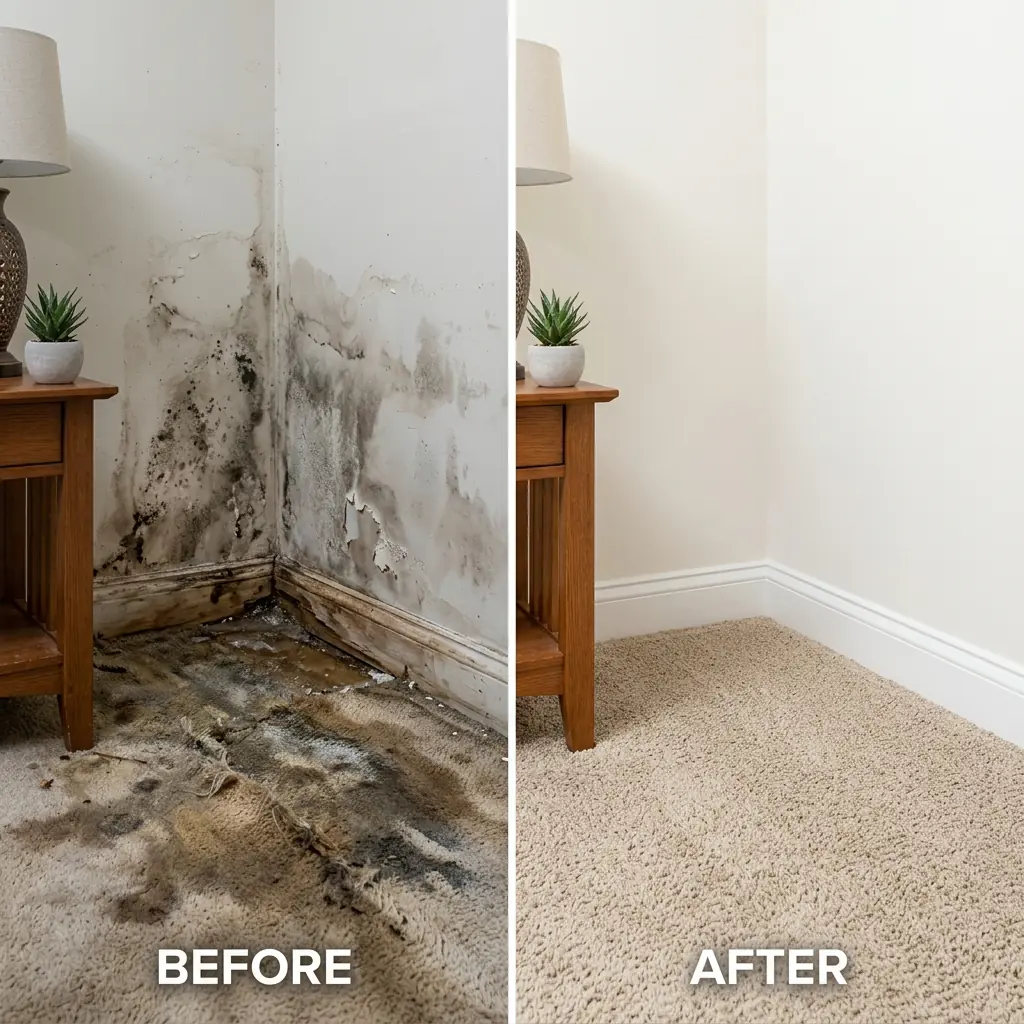
Start With the FEMA Flood Zone, Because It Frames Everything Else
Before you think about policies, know your exposure. Search your address at msc.fema.gov and note your zone. Zone AE is the mapped 100-year floodplain, and if your Coppell home is mortgaged there, your lender almost certainly requires NFIP flood insurance. Zone X is moderate-to-low risk where flood coverage is optional. Homes near Denton Creek, Grapevine Creek, and the Cottonwood Branch corridor are worth checking carefully, because proximity to a channel doesn't always match the official mapped boundary, and plenty of Coppell flood claims come from Zone X addresses during a major storm.
What Your Standard Homeowners Policy Treats as Water Damage
A standard Texas homeowners policy covers water that originates inside the home or enters from above: a burst or frozen supply line, an appliance failure, a toilet or drain overflow from a one-time event, hail or wind opening the roof to rain, or an HVAC condensate line backing up. The phrase every adjuster leans on is "sudden and accidental." The loss needs an identifiable cause and a moment it happened. A pipe that lets go overnight qualifies. A slow leak someone let run for months usually doesn't.
What Only NFIP Flood Insurance Will Cover
The National Flood Insurance Program covers what homeowners policies exclude: rising water from a creek, stream, or drainage system that overwhelms the ground and enters from below. Denton Creek or Grapevine Creek jumping its banks into your home is flood damage, full stop, and no standard homeowners policy in Coppell will pay for it. That coverage exists only under a separate NFIP or private flood policy, which is why the FEMA-zone check above matters before the storm, not after.
The North Texas Clay Factor That Blurs the Line
Coppell sits on Blackland Prairie clay that swells when wet and shrinks when dry. That movement opens hairline gaps at the slab and lower walls, and during a heavy rain those gaps can let runoff seep in at grade in a way that sits awkwardly between "water damage" and "flood damage." How that gray-area intrusion gets classified depends almost entirely on how the source is documented at the time it happens, which is where a professional assessment earns its keep.
When One Storm Triggers Two Separate Claims
A single North Texas storm can cause both categories at once: hail damages the roof and lets rain in (a homeowners claim) while the same system pushes creek water into the first floor (an NFIP claim). File them separately, with separate policies, and document each origin on its own. Photograph the roof and the interior ceiling damage together; photograph the exterior flood waterline and the standing water inside separately. Mixing the two sets of evidence makes both claims slower and easier to dispute.
A 30-Minute Coverage Check Before Storm Season
Pull your homeowners declarations page and find the mold sublimit, often $1,000 to $5,000 on a standard Texas policy, and ask your agent about an endorsement if it's low. Confirm your FEMA zone at msc.fema.gov and, if you're in Zone AE without NFIP coverage, call your lender. Check for a vacancy clause that could open a gap if the home sits empty during a freeze. None of this is expensive; all of it is less expensive than discovering the gap mid-claim.
We work with both homeowners and NFIP flood claims across Coppell. Call (972) 961-2394. Our water mitigation service documents the water's source and path in a format built to support adjuster review for both claim types at once.