Can you actually prevent most water damage?
Nearly every water damage call has a prevention step that would have changed the outcome, usually one that took an afternoon and cost less than the deductible. The trick is timing. A roof problem is no-obligation to fix in February and expensive to discover during April hail. A freeze prep done in November is worthless if you do it after the pipe bursts. Match the task to the season and the odds shift hard in your favor.
How do you prep the roof and gutters for spring storms?
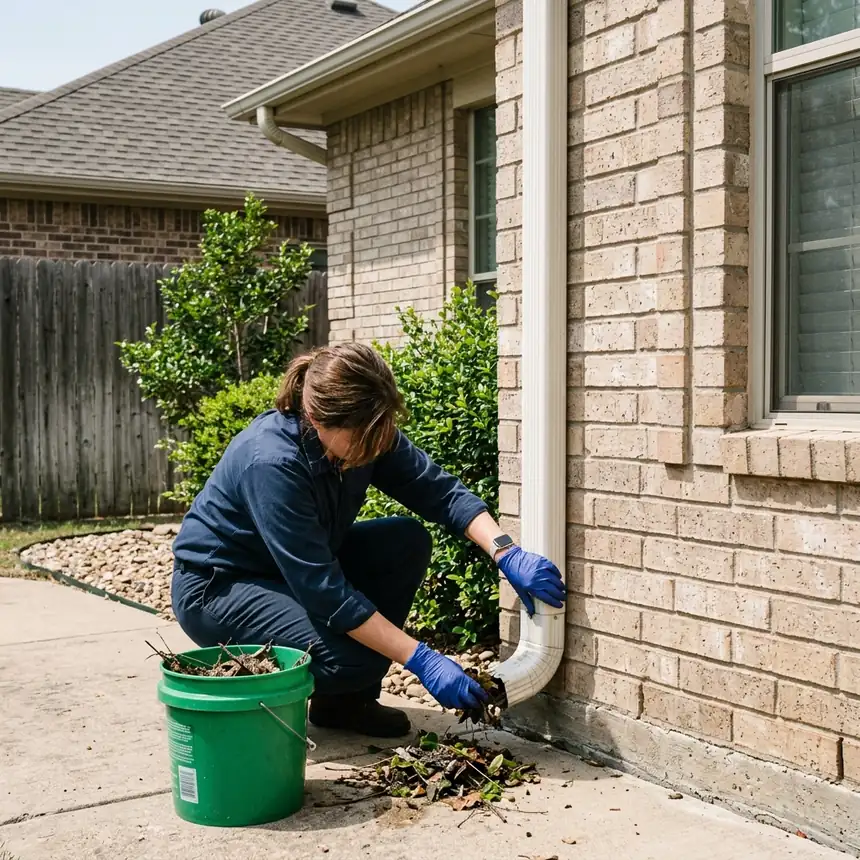
Before North Texas storm season opens, get on the roof or hire someone who will. Look for curled, cracked, or missing shingles, and pay closest attention to the flashing around chimneys, skylights, and vents, because that is where most roof leaks actually start, not in the field of the shingles. Clear the gutters while you're at it. A clogged gutter overflows against the foundation instead of carrying water away, and in a larger Coppell home with long roof runs, that's a lot of water aimed at the wrong place.
What should you watch for in spring?
When the rains come, walk your yard during a moderate one and see where water collects. Pooling against the foundation builds hydrostatic pressure exactly where you don't want it, and downspouts should be carrying water several feet out, not dumping it at the wall. If your home sits near Grapevine Creek, Denton Creek, or another low-lying stretch of Coppell, look up your FEMA flood zone so you know whether rising water is a real part of your risk profile or not.
How do you winterize before the first freeze?
North Texas freezes come with a day or two of warning, but the prep works better done in advance. Before the season, add foam insulation or heat tape to any exposed pipe runs in the attic, the single highest-risk failure point in a Coppell home. When a freeze watch posts, disconnect the garden hoses, open cabinet doors under exterior-wall sinks, and let cold-side faucets drip overnight. Attic bursts are the bulk of what our burst pipe water damage team runs on each winter, and nearly all of them were preventable.
Which year-round habits prevent water damage?
Some prevention isn't seasonal. Once a year, check under sinks for corrosion or green buildup at copper fittings, watch for slow drains, and note any unexplained pressure changes, all early signs of plumbing reaching the end of its life. After any big rain, take five minutes to walk the perimeter and check ceilings and under-sink cabinets for new moisture. And the one step almost everyone skips: find and test your main shutoff at the street meter now, before an emergency, because a seized meter valve discovered mid-burst costs you the minutes that matter most.
Already dealing with water damage in Coppell? Call (972) 961-2394 for emergency water damage restoration, 24/7. A crew arrives, extracts the water, and starts monitoring immediately with everything recorded for your insurer. Prevention wins, but fast response is what limits the damage, from Pecan Hollow to the rest of Coppell.